Thursday, December 11, 2014

Memoirs of an Imaginary Friend by Matthew Dicks


We all know the saying, "You can't judge a book by it's cover", but how many of us have done just that?  I certainly have.  For example, if the cover of a book shows two people in a steamy embrace, partially disrobed, I can be certain it is not a book I will enjoy reading.  Most often my book-cover-judging rears its head in the form of reading a book because of the look of the cover.  I could go on and on about books I've chosen because the cover appealed to me and in most cases my judgement proved correct, but I won't get into all of that now.

One such book that had me at "Hello, pretty cover" was Memoirs of an Imaginary Friend by Matthew Dicks.  This book is written from the perspective of Budo, the imaginary friend of Max Delaney.  Budo is special because he is exceptionally long lived for an imaginary friend and also because he looks so real.  Most of the imaginary friends he knows do not have such well- developed appearances, but Max has imagined him so well that most other imaginary friends mistake him for human.  This is all so because, though it isn't expressly stated in the book, Max appears to be "on the spectrum".  However, just because Budo is imaginary does not mean that he isn't real.

I might need Max's imagination to exist, but I have my own thoughts, my own ideas, and my own life outside of him.  I am tied to Max the same way that an astronaut is tied to his spaceship by hoses and wires.  If the spaceship blows up and the astronaut dies, that doesn't mean that the astronaut was imaginary.  It just means that his life support was cut off.
Same for me and Max.

Budo experiences quite a lot in the few short weeks during which this book is set.  He watches another imaginary friend, one to whom he was very close, disappear.

"I want to spend my last few minutes with her.  Sitting next to my friend.  It's the only thing I'm really sad about."
"What?"
"That I won't be able to look at her anymore. See her grow up.  I'm going to miss Meghan so much.... I love her so much."

He describes the human people that he has come to know by watching them:  Max's parents, the people who work in and those who visit the 24-hour gas station down the street, the teachers in Max's school.  Matthew Dicks does such a wonderful job of observing and then relating so much about human behavior.  He depicts his characters with such depth that, as a reader, you feel they must be real people.  And he sees things in these must-be-real-people that we don't always see.  He sees the skill Max's therapist holds when rather than asking him why lunch is his favorite part of the school day, she asks him if he knows why lunch is his favorite part of the school day.

If Max can't explain why lunch is his favorite part of school then he can just say no, and he doesn't have to feel dumb for not knowing the answer.  If Dr. Hogan asks a question that makes Max feel dumb, she might never get him to talk.

He sees the love Max's mother has for him and the way she shows it.  She doesn't fight Max on the fact that he cannot wear more than seven pieces of clothing at a time and that this means she will never be able to persuade him to wear gloves, even on the coldest days.  Instead, she sews fur linings into all his coat pockets so he can put his hands in his pockets to keep them warm.

He explains in the most wonderful way the difference between a mediocre teacher and a really good one.

There are two kinds of teachers in the world.  There are teachers who play school and teachers who teach school, and Miss Daggerty and Mrs. Sera and especially Mrs. Gosk are the kind of teachers that teach school.  They talk to kids in their regular voices and say things that they would say in their own living rooms....[K]ids love them because they talk about real things with real voices and they always tell the truth.

And my favorite part, which I won't quote here because I couldn't bear to cut any of it out, is when, through Budo, Dicks explains to his readers the meaning of real bravery.  

This was a extraordinary book and I highly recommend it.  I really think you will love it, too.  

Thursday, December 4, 2014

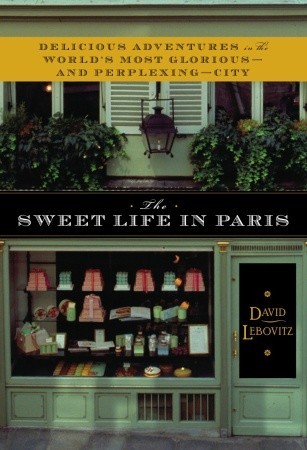
The Sweet Life in Paris by David Lebovitz


I am not generally a big reader of non-fiction, but occasionally I come across something special like this one: The Sweet Life in Paris by famous pastry chef and cookbook author David Lebovitz.  Lebovitz was named one of the Top Five Pastry Chefs in the Bay Area by the San Francisco Chronicle and has been featured in numerous magazines and news papers.  He has written seven cookbooks and his latest, My Paris Kitchen, was named the best cookbook of the year by Amazon.

The Sweet Life in Paris is more memoir than cookbook as Lebovitz shares with us all he has learned since he followed his dream to pick up and move to Paris.  The writing is both informative and funny.  An American living in Paris has much to learn and he is happy to share his lessons with his readers.  Did you know there is a right way to eat a banana?  And no, it really isn't the way you do it.  Lebovitz describes the painstaking way Parisians eat their bananas with a knife and fork, slice by slice.  Then he says, "I admit that I still eat bananas like my primordial predecessors, but only in the privacy of my home.  Outside of the house, though, I avoid fruit.  It's too stressful."  He tells about the dangerous adventure that can be walking down a Parisian sidewalk.  At first he was very confused by the way it seemed the other people were aiming to run him down.  As he adjusted to life in The City of Lights, he learned that yielding was the problem.  Now he barrels down the street as if he belongs there.

It took Lebovitz a little while to learn the ways of the city, but don't ask him if he's fluent in French.

When people ask, "How long did it take you to become fluent in French?" I respond, "Become fluent?  Even the French aren't fluent in French."  To prove it, there's an annual Dicos d'Or, or a dictation contest where French people compete against each other to see who can best comprehend and write down what's spoken to them- in their own language!

This book is filled with hilarious anecdotes and hard lessons learned.  It is also filled with an amazing number of places one must visit in Paris.  If I ever make it back, I will be headed straight to Patisserie Viennoise for the thick hot chocolate "topped with a completely unreasonable amount of billowy whipped cream".  And then there are the recipes.  There are over fifty recipes for delicious-sounding dishes included in this book and each one is accompanied by a story.  I can't wait to try the Chocolate Macarons and the Cheesecake.

Think of this as a memoir or a cookbook or a travel guide, but any way you think of it, you will enjoy it.  I may never move to Paris, but this book certainly sparked my wanderlust.

Saturday, November 22, 2014

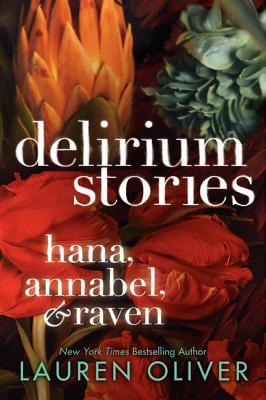
Delirium Stories by Lauren Oliver


Every book contains secondary and tertiary characters about whom we would like to know more.  There are always scenes we wish we could observe from another perspective.  Lauren Oliver brings us that opportunity in Delirium Stories.  There is so much more about this series that I'd like to know, but Oliver allows us to peek into just three additional stories: those of Hana, Annabel and Raven.

Hana is Lena's best friend and her story shows us her perspective during their last summer before their cure.  All the time that Lena was struggling to know what to do about the cure, she had no idea that Hana was also having the same struggle.  Annabel is Lena's mother.  We get to see her life both before she married Lena's father and also her time in prison.  It is very interesting to get a little more background about her.  Raven is Lena's friend, the woman who saves her in the Wild.  Raven tells us about saving Blue and also about her rescue of Julian.  It is this last story that makes me want to reimagine the ending of the series.  Or maybe I don't have to.  Maybe the somewhat open ending leaves room for the ending I would prefer.

I loved reading these very quick stories.  Perhaps they were just created as a writing exercise for the author or perhaps she wanted to share more of her characters with us.  Either way, I love what they add to the series.


Tuesday, November 18, 2014

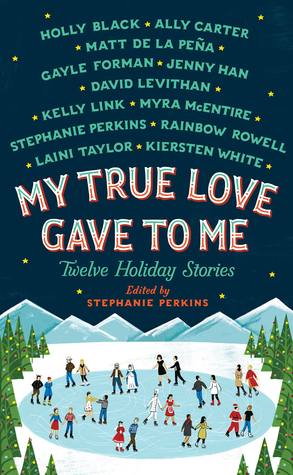
My True Love Gave to Me edited by Stephanie Perkins


'Tis the season!  Well, almost and I am so glad that My True Love Gave to Me edited by Stephanie Perkins came in at the library for me just as the holidays are getting underway.  I don't usually read short story collections because, to be honest, I haven't seen a lot of them that really jump out at me.  A few months ago I saw that this collection of holiday themed stories written by some of the most well know authors of YA fiction was being released and I put myself on the library reserve list before they even had any copies.  I have really enjoyed reading Stephanie Perkins' books as well as those of several of the other authors included in this collection.  I was not disappointed in this book, either.

Rainbow Rowell writes about midnights on New Year's Eve spanning several years and falling in love with someone unexpected.  Kelly Link writes a tale with a fantasy element involving someone she meets only when it snows.  Matt de la Pena shakes things up by writing from the male perspective about a Christmas break trapped by a blizzard in an apartment with a cat.  Oh, and the cute girl upstairs.  Jenny Han gives us a story not unlike the movie, Elf, only what if the orphan Santa brought to the North Pole were a girl?  Stephanie Perkins tells about a young woman determined to somehow get a Christmas tree into her moving-boxes-stuffed apartment and the Christmas tree salesman who helps her.  Holly Black spins a yarn truly original about a New Year's Eve party visited by the boy of one girl's dreams.  Gayle Forman gives us a funny story about a young Jewish girl spending her first Hanukkah at college in a town very unused to people  who celebrate Hanukkah or people from New Jersey or people who use sarcasm.  Myra McEntire also bucks tradition by making her main character a teenage boy and this one is quite a trouble maker.  Kiersten White sets her story in a diner in the very small town of Christmas, CA, where the new cook seems to have a magic all his own.  Ally Carter starts off her tale with a young woman switching airplane tickets with a stranger in Chicago's O'Hare airport and ending up in exactly the place she needs to be.  There were two other stories that I tried to read, but couldn't get into.

Overall, I had a great time reading these quick stories.  I'm even more excited for the next month and a half with all of the fun and magic of the holidays.  Some people find this time of year difficult to get into a book because so much of their attention is required with all of the chores and activities leading up to Christmas.  This collection is the perfect solution.  The stories are short, fun and they will still give you a shot of good cheer.

Wednesday, November 12, 2014

Requiem by Lauren Oliver


And in the final installment of the  Delirium trilogy, Requiem by Lauren Oliver is a captivating end to a strong series.  Again, since this post refers to the third book in the series, there may be spoilers for the first two books below.

Where the first book in the series was all about Lena's present, the second book bounced back and forth between her early months in the Wilds and her time working with the resistance.  This final book changes again by shifting between Lena's perspective and her best friend from before, Hana's.  Lena is still out in the Wilds, working with the resistance and Hana is still back in the city.  Hana has had her procedure and is about to be married to the new mayor.  She has concerns about whether or not the cure was entirely successful.  She has begun remembering Lena and their time as friends.

I can admit, now, that I must have loved Lena.  Not in an Unnatural way, but my feelings for her must have been a kind of sickness.  How can someone have the power to shatter you to dust- and also to make you feel so whole?

Lena and her group of friends are searching for a way to fight back and regain control over their lives.

We wanted the freedom to love, and instead we have been turned into fighters.

A revolution is planned and those with nothing to lose are a dangerous society.  This is a very exciting, action-packed conclusion.  I really liked this series, but I will say I really wish the author had included an epilogue.  The ending felt a bit rushed and the copy I read had excerpts from two of the author's other books which fooled me into thinking there were a few chapters remaining.  That always makes me a little crazy.  I would recommend this series.  It really kept my attention and it was difficult to set aside.  I will definitely be reading more from Lauren Oliver.


Pandemonium by Lauren Oliver


Pandemonium by Lauren Oliver is the second book in the Delirium series.  As such, this post is likely to have spoilers for the first book so reader beware.

As we begin Pandemonium, Lena has escaped into the Wilds:

I run, and when I can no longer run, I limp, and when I can't do that, I crawl, inch by inch, digging my fingernails into the soil, like a worm sliding across the overgrown surface of this strange new wilderness.

Lena is alone and dying on the forest floor when she is found by Raven.  Raven takes Lena back to her homestead, a basement she has discovered buried under the ruins of a bombed-out building.  There, Lena is allowed to recover from her injuries and be fed, but it isn't long before she is expected to help.  Lena is surprised to find that the people who live in the Wilds aren't what she has always been taught they would be.  They are kind and they do the best they can; they work together to survive.  Eventually, Lena, Raven and Tack, another new friend, join the resistance to fight against the government that has forced them to live outside civilization.

In the spirit of Hunger Games, Lena is much like Katniss in that she becomes strong when her only other choice is to die.  This isn't one of those obnoxious books where the main character is a weak, simpering young girl dependent upon those around her.  Lena learns quickly and becomes quite a leader.  I mentioned in my post about Delirium that I enjoyed that this book is set in a world not unlike our own.  In this second installment this is expressed even further in that the challenges Lena and her friends face in the Wilds are much like those any of us would face if we were to suddenly be left with nothing but the clothes on our backs.  Survival in the Wilds means hunting, scavenging for shelter and supplies and staying alive from one day to the next.  Occasionally they are confronted by other people from the Wilds that are intent upon causing destruction and they are always watching for government regulators who have come in to the Wilds looking to exterminate the "Invalids".  That is what I like- there are no monsters, no supernatural forces at work.  They are fighting for their lives mostly against nature.  It is refreshing in a literary pool full of the former.

As a rule, the second book in a trilogy tends to be more of a bridge connecting the beginning of the story in the first book to the end in the last, but in this case, I felt like Pandemonium really held its own.  And now my favorite quote from this book:

But forbidden books are so much more.  Some of them are webs; you can feel your way along their threads, but just barely, into strange and dark corners.  Some of them are balloons bobbing up through the sky: totally self-contained, and unreachable, but beautiful to watch.
And some of them- the best ones- are doors.

Delirium by Lauren Oliver


I have been wanting to read Lauren Oliver since I saw the cover for Before I Fall, but it just hadn't happened yet.  Luckily for me, I saw Delirium and the rest of its trilogy on my sister's bookshelf and she agreed to let me borrow them.  Delirium is based in an alternate reality set in our present time.  In this world, love is considered a disease and the cause for all that ails the world.  Scientists have discovered a cure which is administered to each person shortly after he or she turns eighteen.  Many people would like the cure to be available at a much younger age, but the side effects are too severe in children.

Lena is counting down the days until she can receive the cure.  All her life she has been told that amor deliria nervosa "affects your mind so that you cannot think clearly, or make rational decisions about your own well-being" and that the cure will keep her "safe, and free from pain".  Love is a deadly disease and the scientists have discovered that what was once called stress, heart disease, anxiety, depression, hypertension, insomnia, bipolar disorder and more were really only symptoms of the deliria.  When Lean falls in love with a boy, at first she resists the idea of changing her plans to be cured.  As the days continue, however, she realizes that she cannot give him up.  Eventually she decides that she would rather die than be cured and they plan their escape.

One thing that I find compelling in this series is that this isn't some post-apocalyptic world far in the future as so many books of this type seem to be.  This is a world in which scientific discovery and politics have conspired to create a new regime.  At the time that this story begins, this new order has been in place for so long that no one remembers what life was like before the cure.  The government's propaganda and strict laws with unendurable punishments keep people from asking questions or knowing anything beyond what they are taught to believe.  Anyone who shows any tendency toward disagreement is considered infected and arrested and locked away for life or executed.  Beyond the walls of the city are the Wilds that the government has claimed to have "sanitized", but that are rumored to be filled with terrible creatures called "Invalids"- people living without the cure.

Living without love is so incomprehensible to me and I think that is what makes this book so interesting.  A world destroyed by nuclear war or climate change or some other kind of catastrophe is somewhat expected in dystopian literature by this point.  The removal of love from society, however, offers a completely new angle.  As a mother, I can't help but wonder how one would be able to parent without love.  Loving our children is what motivates parents to care for them as infants and beyond.  It is why exhausted new mothers continue to wake every hour or two to feed and care for their children.  At one point in the book, Lena recalls being a small child and falling down and getting hurt.  When her mother comforts her as she cries another mother chastises her and tells her she should be ashamed of herself.  Comfort is a symptom of the disease.

I feel that Oliver has done a masterful job of creating a full environment, bringing in details that drive home life under totalitarian rule.  I also loved that each chapter is headed with a quote either from The Safety, Health, and Happiness Handbook or The Book of Shhh or from some other form of government literature.  They lend even further texture to the world she has designed.

I'll leave you with this passage about Lena's older sister:

Even then she refused the procedure and the comfort it would give her, and on the day the cure was to be administered it took four scientists and several needles full of tranquilizer before she would submit, before she would stop scratching with her long, sharp nails, which had gone uncut for weeks, and screaming and cursing and calling for Thomas.  I watched them come for her, to bring her to the labs; I sat in a corner, terrified, while she spit and hissed and kicked, and I thought of my mom and dad.
That afternoon, thought I was still more than a decade away from safety, I began to count the months until my procedure.